 Add to Chrome
 Add to Firefox
 Add to Edge
RoboWits: Unexpected Challenges for Robotic Creative Problem Solving
May 28, 2026
The ability to reason, adapt, and creatively solve problems under unexpected challenges is essential for robots operating in real-world environments. However, current robotic benchmarks primarily emphasize skill-level execution and provide limited insight into such cognitive reasoning capabilities. We introduce RoboWits, a bi-manual robotic benchmark designed to systematically evaluate cognitive reasoning, creative tool use, and robustness to unexpected conditions. To enable scalable construction of high-quality reasoning-centric unexpected scenarios, we propose an automated task generation pipeline formulated as a multi-agent cooperative framework, comprising agents for seed task generation and verification, metric generation, scene generation, and task mutation. Using the pipeline, we curated 30 diverse seed tasks and 208 tasks with mutations and graded difficulty across geometry, material, and assembly-based reasoning. We benchmark popular robot policies, pre-trained VLAs, and oracle-state planners. Our results reveal a significant performance gap: while pre-trained VLAs exhibit preliminary success on seed tasks after single-task fine-tuning, they struggle to perform on mutated tasks, implying their brittleness in manipulation tasks requiring reasoning, strategy adaptation, and robustness to deceptive or constrained environments. Project page is available at https://umass-embodied-agi.github.io/RoboWits.

Sentinel: Embodied Cooperative Spatial Reasoning and Planning
May 25, 2026In this work, we study Cooperative Spatial Intelligence, the ability of decentralized embodied agents to coordinate effectively under dynamic environmental constraints across city-scale outdoor domains. We introduce Sentinel Challenge, a benchmark where multiple decentralized embodied agents must communicate in natural language to agree on a mutually safe and convenient meeting point within large, city-scale outdoor environments. Each agent must then navigate safely while avoiding dynamic sentinels patrolling the area, using a tool that provides coarse spatial information. To address this, we propose CoSaR (Cooperative Spatial Reasoning and Planning), a framework that bridges the high-level communication and planning abilities of foundation models with the precision of classical spatial navigation algorithms. CoSaR enables agents to exchange situational updates, reason over evolving spatial constraints, and collaboratively replan trajectories. Evaluated across 14 city-level scenes with 3-5 agents, CoSaR consistently leads to faster gathering, shorter path lengths, and improved safety. Our results demonstrate that integrating dynamic communication with spatial reasoning is essential for robust multi-agent cooperation. By formalizing this new setting and providing a scalable benchmark, we aim to build a foundation for advancing cooperative spatial intelligence in embodied multi-agent systems. Code and challenge are available at https://github.com/UMass-Embodied-AGI/Sentinel.
FatigueFormer: Static-Temporal Feature Fusion for Robust sEMG-Based Muscle Fatigue Recognition
Mar 27, 2026We present FatigueFormer, a semi-end-to-end framework that deliberately combines saliency-guided feature separation with deep temporal modeling to learn interpretable and generalizable muscle fatigue dynamics from surface electromyography (sEMG). Unlike prior approaches that struggle to maintain robustness across varying Maximum Voluntary Contraction (MVC) levels due to signal variability and low SNR, FatigueFormer employs parallel Transformer-based sequence encoders to separately capture static and temporal feature dynamics, fusing their complementary representations to improve performance stability across low- and high-MVC conditions. Evaluated on a self-collected dataset spanning 30 participants across four MVC levels (20-80%), it achieves state-of-the-art accuracy and strong generalization under mild-fatigue conditions. Beyond performance, FatigueFormer enables attention-based visualization of fatigue dynamics, revealing how feature groups and time windows contribute differently across varying MVC levels, offering interpretable insight into fatigue progression.
Doc2AHP: Inferring Structured Multi-Criteria Decision Models via Semantic Trees with LLMs
Jan 23, 2026While Large Language Models (LLMs) demonstrate remarkable proficiency in semantic understanding, they often struggle to ensure structural consistency and reasoning reliability in complex decision-making tasks that demand rigorous logic. Although classical decision theories, such as the Analytic Hierarchy Process (AHP), offer systematic rational frameworks, their construction relies heavily on labor-intensive domain expertise, creating an "expert bottleneck" that hinders scalability in general scenarios. To bridge the gap between the generalization capabilities of LLMs and the rigor of decision theory, we propose Doc2AHP, a novel structured inference framework guided by AHP principles. Eliminating the need for extensive annotated data or manual intervention, our approach leverages the structural principles of AHP as constraints to direct the LLM in a constrained search within the unstructured document space, thereby enforcing the logical entailment between parent and child nodes. Furthermore, we introduce a multi-agent weighting mechanism coupled with an adaptive consistency optimization strategy to ensure the numerical consistency of weight allocation. Empirical results demonstrate that Doc2AHP not only empowers non-expert users to construct high-quality decision models from scratch but also significantly outperforms direct generative baselines in both logical completeness and downstream task accuracy.
Virtual Community: An Open World for Humans, Robots, and Society
Aug 20, 2025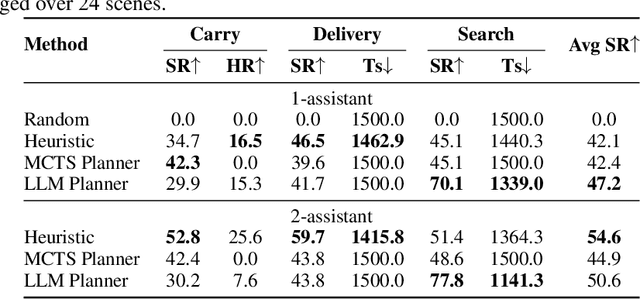
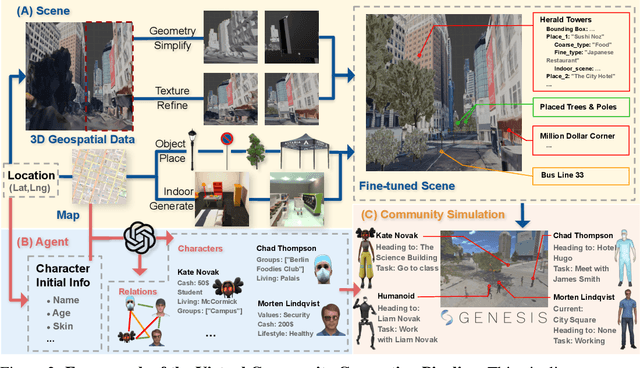
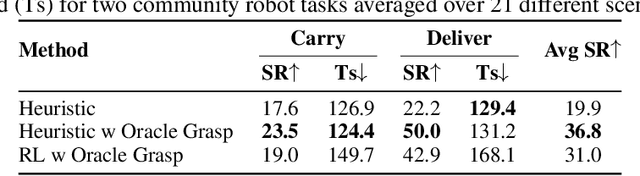

The rapid progress in AI and Robotics may lead to a profound societal transformation, as humans and robots begin to coexist within shared communities, introducing both opportunities and challenges. To explore this future, we present Virtual Community-an open-world platform for humans, robots, and society-built on a universal physics engine and grounded in real-world 3D scenes. With Virtual Community, we aim to study embodied social intelligence at scale: 1) How robots can intelligently cooperate or compete; 2) How humans develop social relations and build community; 3) More importantly, how intelligent robots and humans can co-exist in an open world. To support these, Virtual Community features: 1) An open-source multi-agent physics simulator that supports robots, humans, and their interactions within a society; 2) A large-scale, real-world aligned community generation pipeline, including vast outdoor space, diverse indoor scenes, and a community of grounded agents with rich characters and appearances. Leveraging Virtual Community, we propose two novel challenges. The Community Planning Challenge evaluates multi-agent reasoning and planning ability in open-world settings, such as cooperating to help agents with daily activities and efficiently connecting other agents. The Community Robot Challenge requires multiple heterogeneous robots to collaborate in solving complex open-world tasks. We evaluate various baselines on these tasks and demonstrate the challenges in both high-level open-world task planning and low-level cooperation controls. We hope that Virtual Community will unlock further study of human-robot coexistence within open-world environments.
Retrieval Augmented Decision-Making: A Requirements-Driven, Multi-Criteria Framework for Structured Decision Support
May 24, 2025Various industries have produced a large number of documents such as industrial plans, technical guidelines, and regulations that are structurally complex and content-wise fragmented. This poses significant challenges for experts and decision-makers in terms of retrieval and understanding. Although existing LLM-based Retrieval-Augmented Generation methods can provide context-related suggestions, they lack quantitative weighting and traceable reasoning paths, making it difficult to offer multi-level and transparent decision support. To address this issue, this paper proposes the RAD method, which integrates Multi-Criteria Decision Making with the semantic understanding capabilities of LLMs. The method automatically extracts key criteria from industry documents, builds a weighted hierarchical decision model, and generates structured reports under model guidance. The RAD framework introduces explicit weight assignment and reasoning chains in decision generation to ensure accuracy, completeness, and traceability. Experiments show that in various decision-making tasks, the decision reports generated by RAD significantly outperform existing methods in terms of detail, rationality, and structure, demonstrating its application value and potential in complex decision support scenarios.
Hunyuan-Game: Industrial-grade Intelligent Game Creation Model
May 20, 2025Intelligent game creation represents a transformative advancement in game development, utilizing generative artificial intelligence to dynamically generate and enhance game content. Despite notable progress in generative models, the comprehensive synthesis of high-quality game assets, including both images and videos, remains a challenging frontier. To create high-fidelity game content that simultaneously aligns with player preferences and significantly boosts designer efficiency, we present Hunyuan-Game, an innovative project designed to revolutionize intelligent game production. Hunyuan-Game encompasses two primary branches: image generation and video generation. The image generation component is built upon a vast dataset comprising billions of game images, leading to the development of a group of customized image generation models tailored for game scenarios: (1) General Text-to-Image Generation. (2) Game Visual Effects Generation, involving text-to-effect and reference image-based game visual effect generation. (3) Transparent Image Generation for characters, scenes, and game visual effects. (4) Game Character Generation based on sketches, black-and-white images, and white models. The video generation component is built upon a comprehensive dataset of millions of game and anime videos, leading to the development of five core algorithmic models, each targeting critical pain points in game development and having robust adaptation to diverse game video scenarios: (1) Image-to-Video Generation. (2) 360 A/T Pose Avatar Video Synthesis. (3) Dynamic Illustration Generation. (4) Generative Video Super-Resolution. (5) Interactive Game Video Generation. These image and video generation models not only exhibit high-level aesthetic expression but also deeply integrate domain-specific knowledge, establishing a systematic understanding of diverse game and anime art styles.
TesserAct: Learning 4D Embodied World Models
Apr 29, 2025
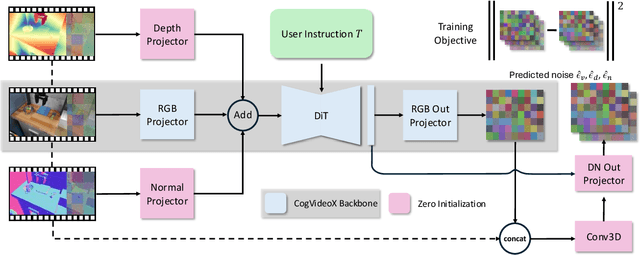
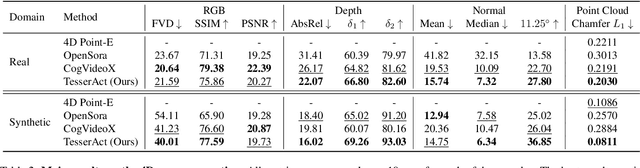
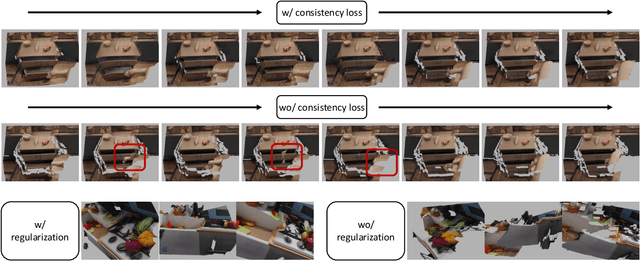
This paper presents an effective approach for learning novel 4D embodied world models, which predict the dynamic evolution of 3D scenes over time in response to an embodied agent's actions, providing both spatial and temporal consistency. We propose to learn a 4D world model by training on RGB-DN (RGB, Depth, and Normal) videos. This not only surpasses traditional 2D models by incorporating detailed shape, configuration, and temporal changes into their predictions, but also allows us to effectively learn accurate inverse dynamic models for an embodied agent. Specifically, we first extend existing robotic manipulation video datasets with depth and normal information leveraging off-the-shelf models. Next, we fine-tune a video generation model on this annotated dataset, which jointly predicts RGB-DN (RGB, Depth, and Normal) for each frame. We then present an algorithm to directly convert generated RGB, Depth, and Normal videos into a high-quality 4D scene of the world. Our method ensures temporal and spatial coherence in 4D scene predictions from embodied scenarios, enables novel view synthesis for embodied environments, and facilitates policy learning that significantly outperforms those derived from prior video-based world models.
SnapMem: Snapshot-based 3D Scene Memory for Embodied Exploration and Reasoning
Nov 23, 2024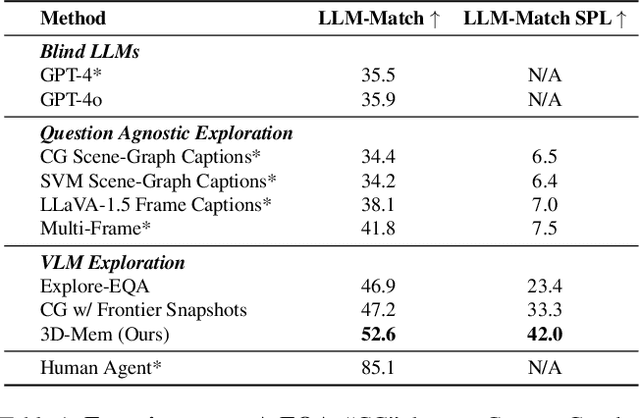
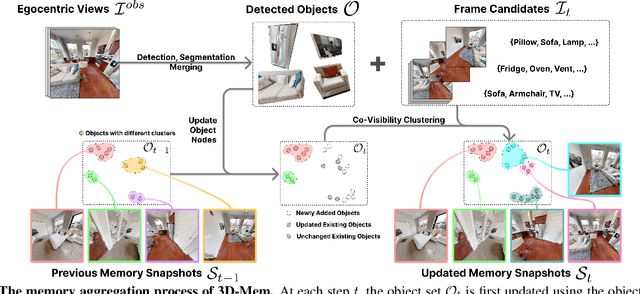
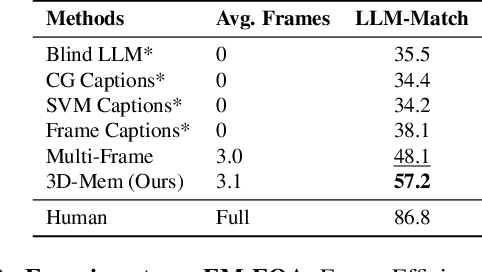
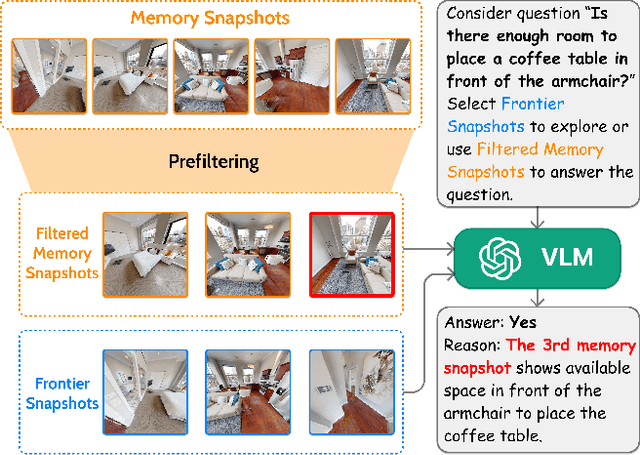
Constructing compact and informative 3D scene representations is essential for effective embodied exploration and reasoning, especially in complex environments over long periods. Existing scene representations, such as object-centric 3D scene graphs, have significant limitations. They oversimplify spatial relationships by modeling scenes as individual objects, with inter-object relationships described by restrictive texts, making it difficult to answer queries that require nuanced spatial understanding. Furthermore, these representations lack natural mechanisms for active exploration and memory management, which hampers their application to lifelong autonomy. In this work, we propose SnapMem, a novel snapshot-based scene representation serving as 3D scene memory for embodied agents. SnapMem employs informative images, termed Memory Snapshots, to capture rich visual information of explored regions. It also integrates frontier-based exploration by introducing Frontier Snapshots-glimpses of unexplored areas-that enable agents to make informed exploration decisions by considering both known and potential new information. Meanwhile, to support lifelong memory in active exploration settings, we further present an incremental construction pipeline for SnapMem, as well as an effective memory retrieval technique for memory management. Experimental results on three benchmarks demonstrate that SnapMem significantly enhances agents' exploration and reasoning capabilities in 3D environments over extended periods, highlighting its potential for advancing applications in embodied AI.
Constrained Human-AI Cooperation: An Inclusive Embodied Social Intelligence Challenge
Nov 05, 2024


We introduce Constrained Human-AI Cooperation (CHAIC), an inclusive embodied social intelligence challenge designed to test social perception and cooperation in embodied agents. In CHAIC, the goal is for an embodied agent equipped with egocentric observations to assist a human who may be operating under physical constraints -- e.g., unable to reach high places or confined to a wheelchair -- in performing common household or outdoor tasks as efficiently as possible. To achieve this, a successful helper must: (1) infer the human's intents and constraints by following the human and observing their behaviors (social perception), and (2) make a cooperative plan tailored to the human partner to solve the task as quickly as possible, working together as a team (cooperative planning). To benchmark this challenge, we create four new agents with real physical constraints and eight long-horizon tasks featuring both indoor and outdoor scenes with various constraints, emergency events, and potential risks. We benchmark planning- and learning-based baselines on the challenge and introduce a new method that leverages large language models and behavior modeling. Empirical evaluations demonstrate the effectiveness of our benchmark in enabling systematic assessment of key aspects of machine social intelligence. Our benchmark and code are publicly available at https://github.com/UMass-Foundation-Model/CHAIC.